

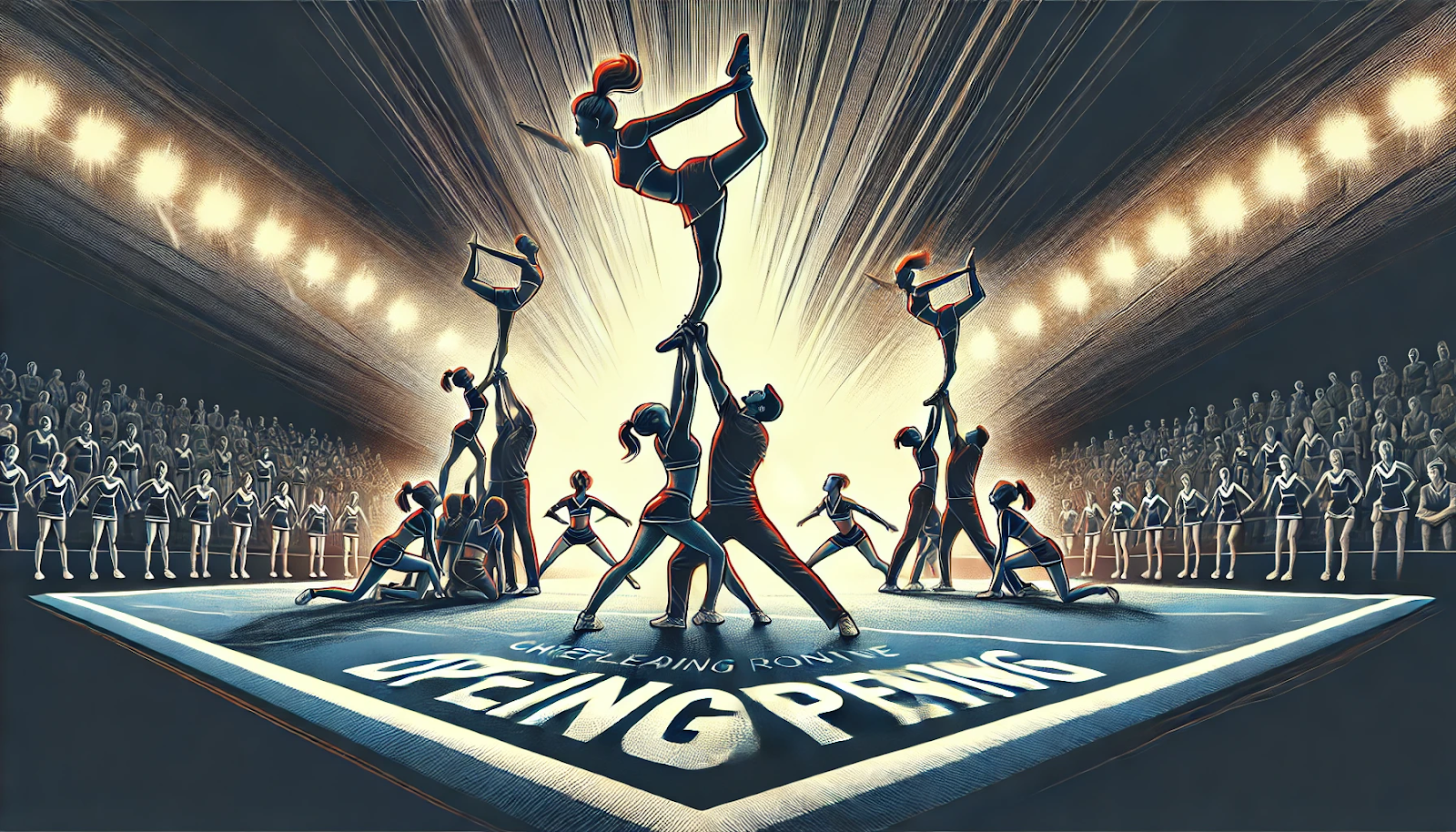
The opening of a cheerleading routine is a critical moment—it sets the tone for everything that follows. It’s the team’s first chance to grab the judges’ attention, excite the crowd, and establish the energy and momentum for the performance. But what’s the best way to begin? Should your routine open with high-impact skills or use motions and movement to build anticipation? Here’s a breakdown of both approaches, along with expert advice on how to choose the best option for your team.
Option 1: Starting with Skills to Grab Attention Immediately
Jumping straight into skills can make a powerful first impression. A tumbling pass, a dramatic stunt, or an eye-catching pyramid can showcase your team’s technical prowess right off the bat. This approach is especially effective if your team excels in advanced skills and has the confidence to execute them flawlessly under pressure.
Advantages:
- Instant Impact: Starting with a skill sets a high-energy tone and captivates the audience immediately.
- Confidence Booster: Nailing a big skill at the beginning can give the team momentum for the rest of the routine.
- Showcasing Strengths: If skills are your team’s strong point, leading with them highlights your competitive edge.
Pro Tip: Choose a skill that your team can execute with consistent precision. An early mistake can hurt scores and throw off the rest of the performance.
Option 2: Using Motions and Movement to Build Energy and Anticipation
Starting with motions and movement allows you to build momentum and engage the audience before diving into technical skills. This approach focuses on clean, synchronized motions, sharp formations, and creative transitions that lay the groundwork for a dynamic routine.
Advantages:
- Strong First Impression: Well-executed motions show off the team’s precision and synchronization.
- Time to Build Energy: This approach allows athletes to warm up mentally and physically before executing high-pressure skills.
- Visual Appeal: Creative movements and transitions can create an engaging opening that draws the audience into the performance.
Pro Tip: Incorporate elements like ripples, arm motions, or formations that seamlessly lead into the first skill for a smooth transition.
How to Decide: Tailoring Your Opening to Your Team’s Strengths
There’s no one-size-fits-all approach to starting a routine—the best choice depends on your team’s unique strengths and goals.
Questions to Consider:
- What Are Your Team’s Strengths?
- If your team excels in stunts or tumbling, opening with a skill can highlight those strengths.
- If synchronization and sharp motions are your forte, start with movements that showcase precision.
- What’s Your Scoring Strategy?
- Opening with skills can immediately rack up points in difficulty categories.
- Starting with motions can ensure you make a strong impression in execution and synchronization.
- What’s the Routine’s Theme or Flow?
- Consider how the opening aligns with the overall story or energy of the routine. A dynamic, motion-based start may better suit a routine focused on showmanship, while skills might suit a routine emphasizing athleticism.
Conclusion
The opening of your routine is a chance to shine and set the stage for a standout performance. Whether you choose to start with skills or motions and movement, the key is tailoring the approach to your team’s strengths and ensuring it aligns with your overall strategy.
Remember, a strong opening is more than just a flashy move or formation—it’s about creating momentum, confidence, and a lasting first impression. Choose wisely, practice thoroughly, and let your team’s talents steal the spotlight right from the start!