


How to Build Confidence in Cheerleaders Before the First Performance
The first performance of the season can feel completely different from practice.
Athletes may know the routine. They may have spent months working on skills, timing, formations, and conditioning. But once parents are watching, the music starts, and the team knows it is being evaluated, nerves can change how athletes perform.
The goal should not be to eliminate nerves completely.
A better goal is to help athletes trust their preparation enough to perform while they are nervous.
Confidence can be trained just like other parts of a routine. The key is giving athletes repeated opportunities to perform, creating manageable pressure in practice, reinforcing preparation, and helping them develop language they can rely on when nerves show up.
Why the First Cheer Performance Feels Different
Practice is familiar.
Athletes know the gym. They know where the coaches are standing. If something goes wrong, they usually know they will get another rep.
A showcase or first competition changes that environment. There may be spectators, unfamiliar surroundings, a different warm-up process, and the understanding that this rep matters.
That is why a team that looks comfortable in practice can suddenly appear hesitant during its first performance.
Knowing the routine and performing the routine under pressure are two different skills.
Coaches have to prepare for both.
Create Performance Opportunities Before Performance Day
The easiest way to make performing feel more normal is to perform more often before the first event.
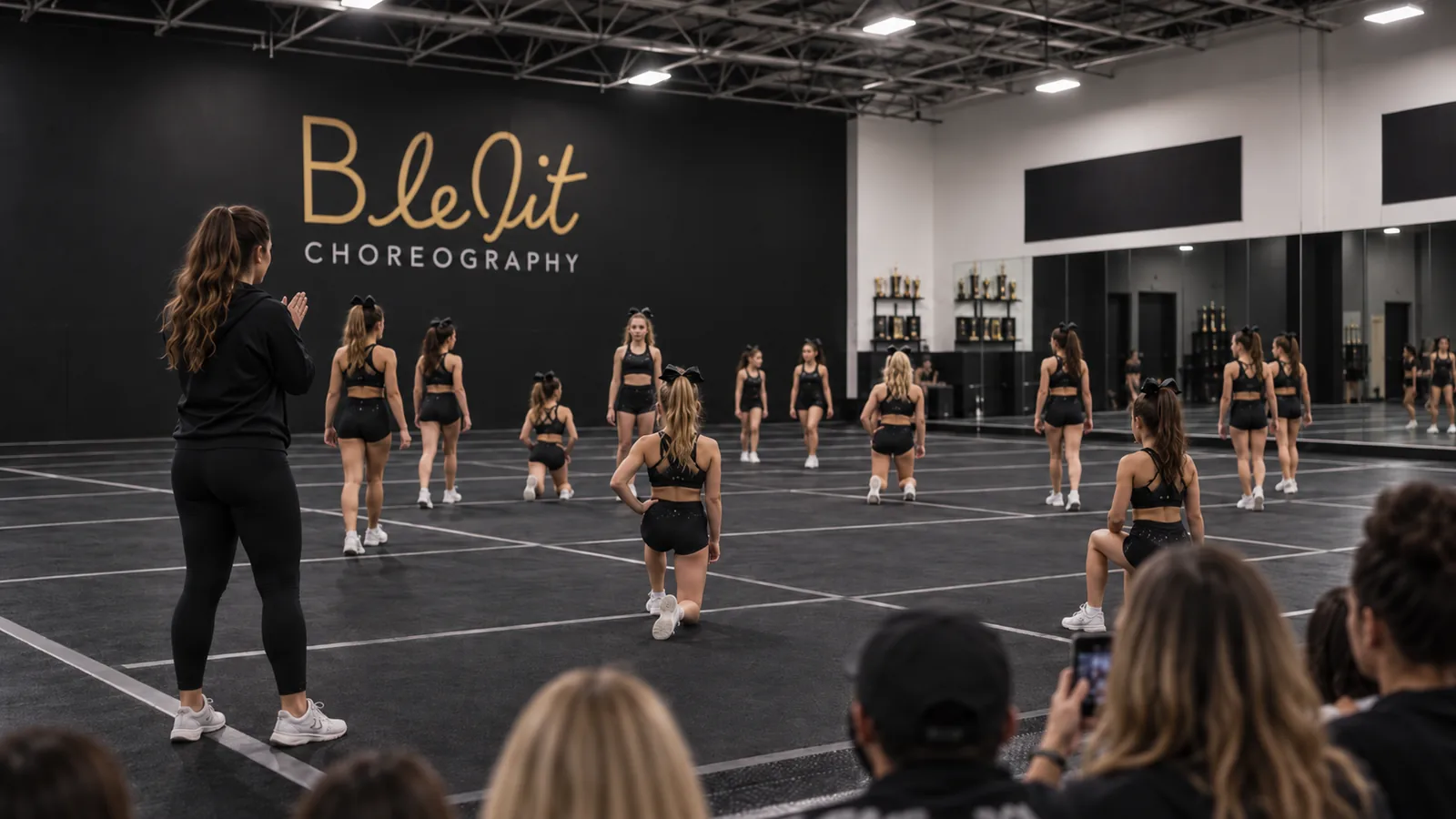
You do not need a formal showcase every week. Create smaller performance opportunities during regular practice.
- Have one stunt group perform while the rest of the team watches.
- Ask a tumbling group to complete its passes one athlete at a time.
- Have the team run the dance section as if they are already in front of an audience.
- Invite parents in for the final 15 minutes of practice.
- Split the team in half and have each group perform sections for the other.
The purpose is exposure.
The more often athletes experience being watched, the less unusual that feeling becomes.
Try saying:
“We’re running the opening through jumps one time. Everyone else is watching. Treat this like performance day.”
That simple change creates a different level of attention without requiring an entire full-out.
Focus on Preparation Instead of Perfection
Young athletes can quickly connect confidence with being perfect.
That becomes a problem because one small mistake can make them feel like the entire performance is falling apart.
Coaches can change that mindset by consistently bringing the conversation back to preparation.
Instead of This
“You have to hit this perfectly.”
Try This
“You’ve done this in practice. Trust what you’ve trained.”
The Mindset
Confidence does not mean believing nothing will go wrong.
The Goal
Trust the preparation enough to keep performing when something feels different.
This matters especially in cheer, where one mistake cannot become the reason an athlete mentally checks out of the next section.
- If an athlete lands a pass differently than expected, they still have to transition.
- If a stunt feels unusual, they still have choreography afterward.
- If one section does not feel perfect, the rest of the routine still needs their attention.
Preparation gives athletes something dependable to return to.
Celebrate Small Wins That Build Evidence
Confidence grows when athletes have evidence that they are improving.
Coaches sometimes wait for the obvious victories: the full-out that hits, the skill that finally works, or the performance that feels great.
But smaller wins matter too.
- Recognize the athlete who used to hesitate before a tumbling pass and now goes immediately.
- Notice the base who communicates more clearly.
- Celebrate the athlete who stayed composed after making a mistake.
- Point out when a nervous performer volunteers to go first.
These moments help athletes build a record of progress.
Be specific with your praise.
Instead of only saying, “Good job,” try: “You looked nervous before that rep, but you committed as soon as the music started.”
That tells the athlete exactly what behavior they can repeat.
Create Pressure in Practice Before Athletes Face It in Competition
Pressure should not be introduced for the first time on performance day.
Coaches can create controlled pressure situations during practice so athletes learn what it feels like to perform when they are uncomfortable.
Unexpected Reps
Call on athletes unexpectedly or choose a tumbling pass without announcing it ahead of time.
Perform While Watched
Ask one stunt group to go while teammates or another team watches.
One-Chance Reps
Run a section once without immediately giving athletes another attempt.
Change the Environment
Play crowd noise, move coaches, change the practice order, or bring in an audience.
You can also add reasonable practice consequences that encourage focus without turning mistakes into embarrassment.
The goal is not to make athletes anxious.
The goal is to teach them: “I can still do my job when the environment feels different.”
Avoid the Common Confidence-Killing Mistakes
Some well-intentioned coaching habits can make performance nerves worse.
- Waiting until the week of the showcase to begin performance reps.
- Constantly talking about everything that could go wrong.
- Demanding perfection during every pressure rep.
- Allowing nervous athletes to repeatedly avoid being watched.
Avoidance may make an athlete feel better in the moment, but it also means they get fewer opportunities to practice performing through discomfort.
Instead, gradually increase the pressure.
1. Small Group
Start with only a few teammates watching.
2. Full Team
Build up to performing in front of the entire team.
3. Parents
Add a small outside audience once athletes become more comfortable.
4. Mock Performance
Finish by recreating a more complete performance-day environment.
Build the athlete’s experience step by step.
Control the Conversation Around Nerves
Listen to what athletes say before difficult reps.
“I hope I hit.”
“I’m so nervous.”
“I’m probably going to mess this up.”
Those phrases matter because they reveal where the athlete’s attention is going.
Coaches can help athletes replace uncertain language with language based on preparation.
Instead of
“I hope I hit.”
Try
“I’m prepared.”
Instead of
“I’m nervous.”
Try
“I’m excited and ready.”
This is not about pretending nerves do not exist.
An athlete can be nervous and prepared at the same time.
A helpful coaching question:
“What do you know you can control on this rep?”
The answer might be their counts, technique, communication, breathing, or how strongly they finish the routine.
Bring athletes back to something actionable.
A Simple Coaching Framework: Expose, Prepare, Pressure, Reset
Use this four-part framework as your team approaches its first performance.
Expose
Give athletes frequent opportunities to perform in front of other people.
Prepare
Make sure athletes know their routine responsibilities and have enough quality repetitions to trust their training.
Pressure
Create controlled situations where athletes have to perform without perfect conditions.
Reset
Teach athletes what to say and do when they feel nervous or make a mistake.
Then repeat the process.
You do not need one giant confidence practice. Confidence is better built through small, repeated experiences throughout the weeks leading into a showcase or competition.
First-Performance Confidence Checklist
Before your team’s first performance, ask:
When Another Set of Eyes Can Help
If your team is preparing for its first competition and you want an experienced set of eyes on the routine, B leJit’s Cheer Routine Review lets you submit a routine video for professional judge-level feedback before competition day.
Confidence Comes From Trusting the Work
The goal is not to create athletes who never feel nervous.
Even experienced performers get nervous.
The goal is to create athletes who can recognize those nerves, trust their preparation, and still perform the routine they have trained.
- Give athletes opportunities to be watched.
- Build pressure into practice gradually.
- Celebrate the small improvements that show them they are capable.
- Teach them how to talk to themselves when nerves arrive.
Then, when the first performance comes, the experience will not feel completely new.
They have already practiced performing through the pressure.