


How to Build a Competition-Day Routine That Helps Cheer Athletes Manage Nerves
Competition-day nerves are normal, even for athletes who have prepared well.
The goal for coaches is not to eliminate every nervous feeling before athletes take the floor. It is to give the team enough familiarity, structure, and consistency that athletes know what to do when those nerves show up.
A dependable competition-day routine can help.
When athletes know how the day will flow, what warm-up will look like, what coaches will emphasize, and what happens right before they perform, they have fewer unknowns competing for their attention.
Instead of wondering what comes next, they can focus on what they have trained to do.
Why Consistency Matters on Competition Day
Competition environments contain plenty of things coaches cannot control.
The venue may feel different. Warm-up spaces may be unfamiliar. There may be noise, delays, other teams, parents, and excitement everywhere.
That makes the things you can control even more important.
A consistent team routine gives athletes something familiar inside an unfamiliar environment.
That does not mean every competition day will follow the exact same minute-by-minute schedule. Events run differently.
Instead, identify the pieces your team can repeat regardless of the venue.
- The order of your team warm-up
- How coaches deliver final reminders
- When athletes put away their phones
- A team breathing exercise
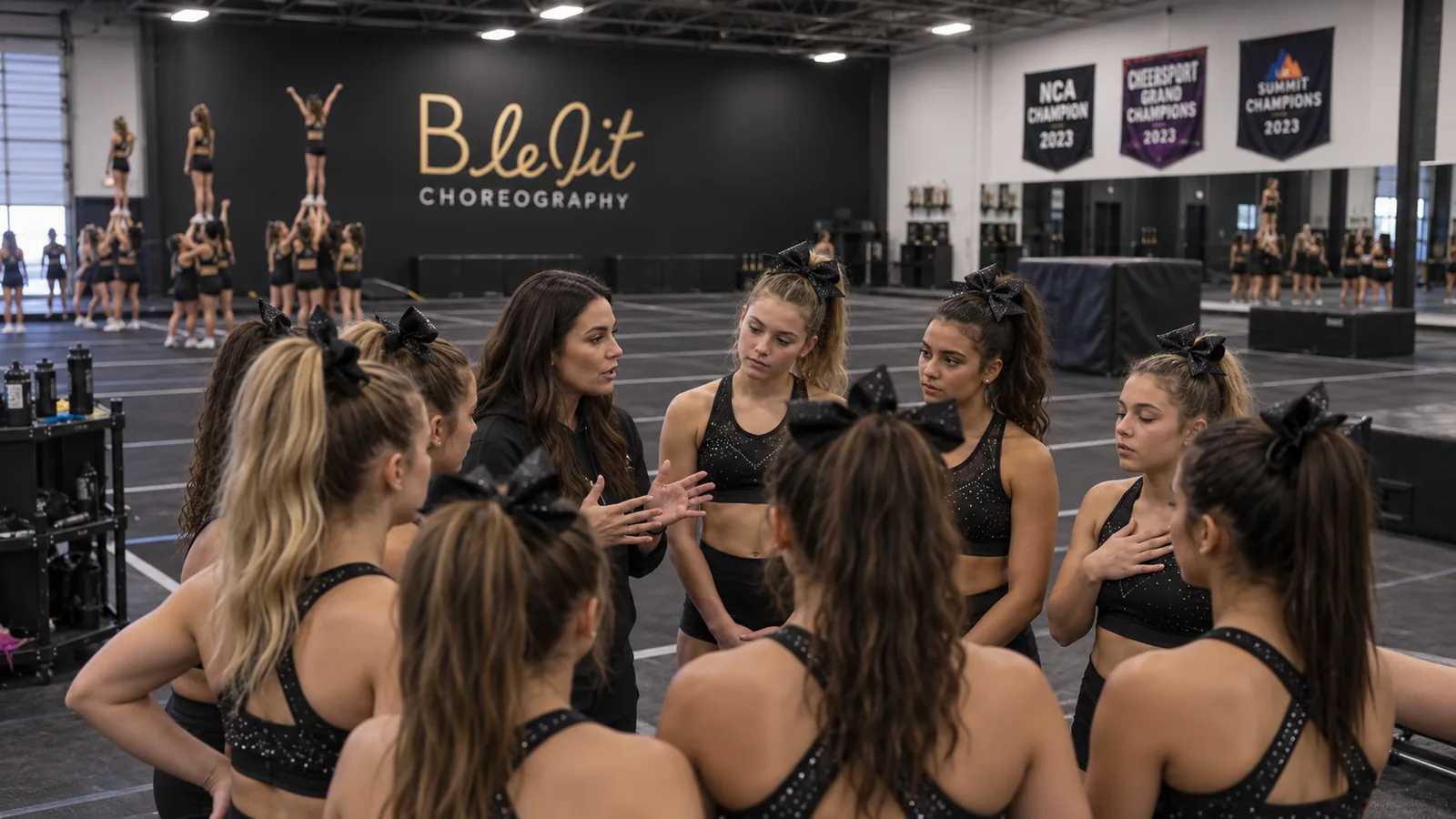
- The way athletes gather before taking the floor
- A team chant or affirmation
- The final message athletes hear from coaches
The exact routine matters less than your ability to repeat it.
Keep the Competition-Day Schedule Familiar
Coaches often have their own preferred competition-day process. Athletes should know that process too.
Do not make athletes guess when they should stretch, when they need to be ready, or what the team is doing next.
Communicate the plan clearly.
For example, athletes might know:
“We check in, get settled, stretch as a team, go through our normal warm-up progression, review our key reminders, and then prepare to take the floor.”
That predictability creates structure.
If your team follows one process at the first competition and a completely different process at the next one, athletes have to spend more mental energy adapting.
Keep the core routine as consistent as the event allows.
Avoid Last-Minute Routine Changes
One of the easiest ways to increase uncertainty is to introduce major changes on competition day.
An athlete should not be standing in warm-ups wondering whether a skill, count, formation, or responsibility has suddenly changed.
Competition day is generally the time to trust the preparation you have already done.
If you notice something you want to improve, make a note for the next practice unless it truly needs immediate attention.
The same applies to coaching cues.
A coach may see an athlete warming up and suddenly want to give five technical corrections at once.
That can create more thinking at exactly the moment when you want athletes trusting their training.
Keep final corrections simple and familiar.
Finish Your Counts
Bring athletes back to timing and execution they already understand.
Trust Your Timing
Reinforce the rhythm and preparation they have already trained.
Stay Aggressive
Remind athletes to maintain commitment through the end of the routine.
Keep It Familiar
Use coaching language athletes have already heard instead of adding new information.
If you identify a routine issue in the days before competition and want live help working through a change rather than trying to solve it at the event, B leJit’s Virtual Enhancement Session offers virtual coaching that can include choreography and routine improvement work.
Explore the Virtual Enhancement Session →
Keep those adjustments in practice whenever possible so competition day can remain focused on execution rather than relearning.
Have a Clear Warm-Up Plan
Warm-ups should not feel improvised.
Athletes should know what is expected of them and what they need to accomplish before taking the floor.
A clear plan also helps coaches avoid reacting emotionally to every warm-up rep.
Your progression might include stretching, jumps, tumbling, stunts, and a focused routine review.
Stretching & Body Preparation
Use a familiar sequence instead of introducing completely new exercises at an event.
The goal is to help athletes feel physically ready while settling into a process they recognize.
Jumps & Tumbling
Have a clear progression.
Decide in advance what needs to be touched and how many quality reps you want.
Stunts
Give stunt groups a plan for which skills and entries need to be reviewed.
Know when the planned work is complete so athletes do not keep repeating skills for reassurance.
Routine Review
Keep final reminders focused.
Choose the few cues that matter most and that athletes already recognize from practice.
A structured warm-up gives athletes a job to do.
That can redirect attention away from worrying about the environment and back toward preparation.
Control the Conversation Around the Team
The emotional environment before a performance matters.
Listen to the conversations happening around your athletes.
- Are they talking about their routine?
- Or are they watching another team and comparing difficulty?
- Are they focused on their responsibilities?
- Or are they discussing scores, placements, mistakes, and everything that could go wrong?
Coaches can help set the tone.
You do not have to pretend other teams do not exist. You do want your athletes spending most of their attention on things they can control.
A useful question is:
“What is your job when the music starts?”
An athlete’s answer might be:
- Communicate with my stunt group.
- Finish my tumbling pass.
- Stay on my counts.
- Commit to my choreography.
- Keep performing through the final section.
Those are productive things to think about.
Trying to predict another team’s score is not.
Build a Pre-Performance Ritual
Many teams naturally develop something they do before taking the floor.
Make it intentional.
A pre-performance ritual might include:
- A team circle
- A breathing exercise
- A short visualization
- A team chant
- A familiar affirmation
- One final message from the coach
It does not have to be elaborate.
In fact, simpler is usually easier to repeat.
Your athletes might gather together, take two controlled breaths, hear one final coaching cue, and finish with the same team chant before every performance.
Over time, the sequence becomes familiar. Athletes know what happens next.
Teach Athletes What to Do With Nervous Energy
Telling an athlete “don’t be nervous” usually is not very useful.
The athlete already feels nervous.
Give them something they can do instead.
- Take a controlled breath.
- Think about the opening count.
- Find your stunt group.
- Repeat your performance cue.
- Focus on the first responsibility you have once the music begins.
Ask:
“What can you control right now?”
That moves the athlete away from everything they cannot control—the crowd, another team, placements, or what might happen—and back toward something actionable.
The goal is not to convince athletes that they should feel nothing.
The goal is to give them a process they can use while they are nervous.
Common Competition-Day Mistakes Coaches Can Avoid
Even experienced coaches can accidentally add stress to an already intense day.
- Changing too much because the competition suddenly feels more important than practice.
- Over-coaching immediately before athletes perform.
- Allowing athletes to spend too much time watching and analyzing competitors.
- Letting one poor warm-up rep change the entire tone of the day.
One bad rep does not erase the preparation that came before it.
If something does not go perfectly in warm-ups, address what actually needs attention, then move forward.
Athletes often look to their coaches for cues about how concerned they should be.
If the coaching staff suddenly treats one imperfect rep like an emergency, the team may respond the same way.
Stay clear, consistent, and focused on the plan.
A Simple Competition-Day Framework: Prepare, Simplify, Focus, Repeat
Use this four-part framework to create a repeatable process for your team.
1. Prepare
Make sure athletes understand the schedule, warm-up expectations, and performance plan before competition day arrives.
2. Simplify
As performance time gets closer, reduce the amount of new information athletes are receiving.
3. Focus
Keep conversations centered on controllable actions: communication, timing, technique, preparation, and individual responsibilities.
4. Repeat
Use the same core process at the next event so the routine becomes increasingly familiar.
Repetition is what turns a competition-day plan into a familiar team routine.
Competition-Day Confidence Checklist
Before your team takes the floor, check:
When Another Set of Eyes Can Help Before Competition
Sometimes competition-day nerves are partly driven by uncertainty about the routine itself.
Coaches may be wondering whether a recent change works, whether a section still needs attention, or whether there is something they are missing after watching the routine every day.
If you want another experienced set of eyes on your routine before your next competition, B leJit’s Cheer Routine Review allows you to submit a routine video for professional, judge-level feedback before competition day.
Confidence Comes From Knowing What Comes Next
Confident athletes are not necessarily athletes who feel completely calm before every performance.
They are athletes who have learned what to do when nerves show up.
A consistent competition-day routine gives them a process they can trust.
- Keep the schedule familiar.
- Make warm-ups intentional.
- Avoid unnecessary last-minute changes.
- Control the conversation around the team.
- Create a simple pre-performance ritual athletes recognize.
Then repeat it.
The fewer decisions athletes have to make about what comes next, the more attention they can give to the performance in front of them.